Gold Tier

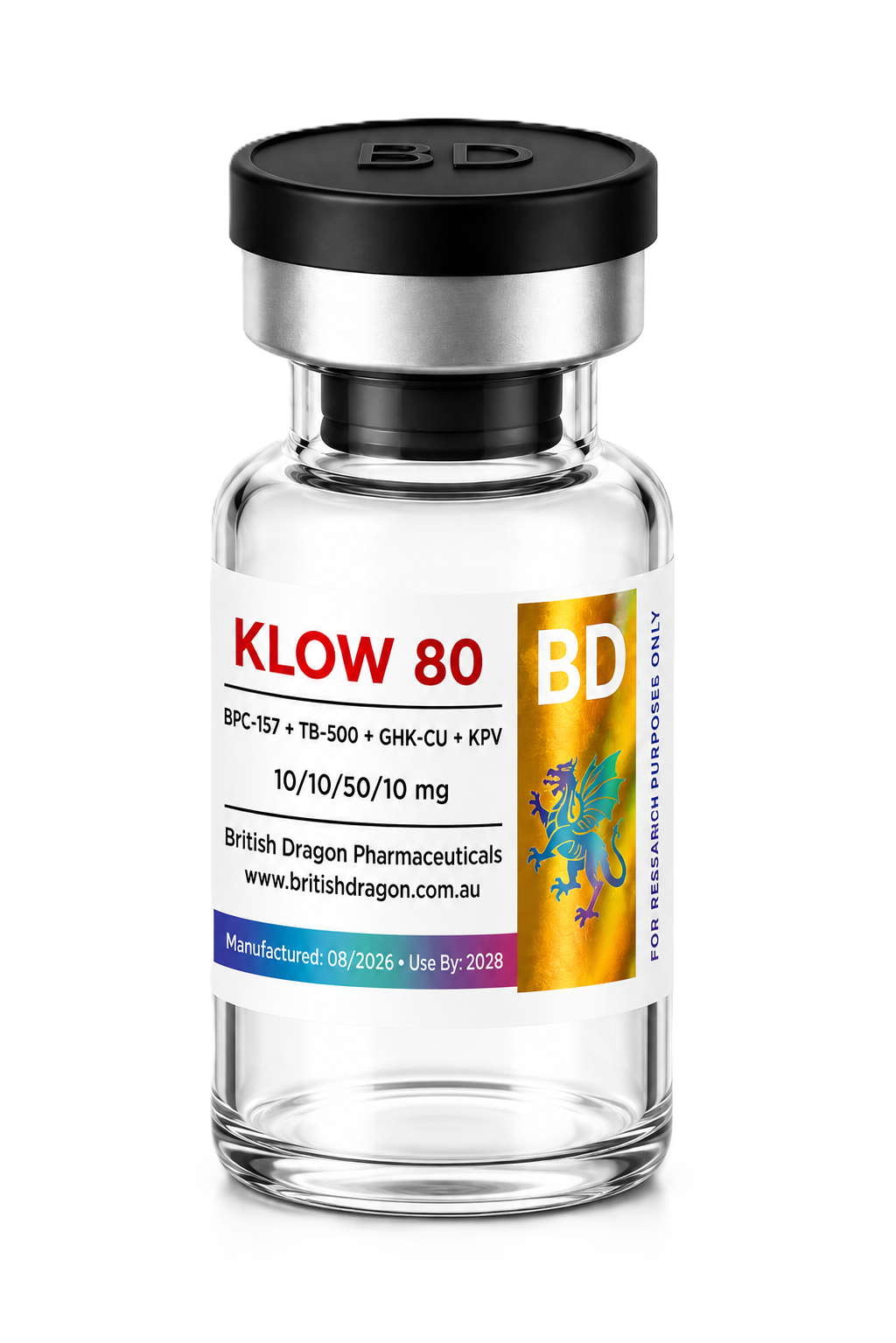
Klow

A research-use-only four-peptide blend — BPC-157, TB-500, KPV, and GHK-Cu — combining tissue-repair and inflammation-research tools in a single vial.

  • Model tissue-repair and inflammation-related signaling together
  • Compare single-peptide vs. blended pathway responses

≥99% Pure | 5X Tested | PhD-Formulated | GMP/ISO-Aligned

Research Use Only (RUO). Not for human or veterinary use.

In stock

Original price was: $170.00.Current price is: $164.00.

Description

Klow is a research-use-only combination formulated for studies of tissue remodeling and protein function. Components include BPC-157 (15-mer), TB-500 (Thymosin β4, 43 aa), KPV (α-MSH 11–13 tripeptide), and GHK-Cu (copper-bound GHK). Investigations examine British Dragon pharmaceuticals, cell-matrix signaling, inflammation-related signaling readouts, and redox balance under controlled conditions. Not intended for diagnostic or therapeutic use.

  • Matrix assembly, fibroblast activity, and protein turnover
  • Inflammation-related signaling and redox balance
  • Structural stress responses in vitro

  • Purity & Identity: ≥99% | HPLC & MS validated
  • Endotoxin & Sterility: <0.05 EU/mg | Third-party verified
  • Stability & Process: Controlled nucleation lyophilization | Stability-focused procedures
  • Formulation & QA: PhD-Formulated | GMP / ISO-Aligned manufacturing
  • Packaging: Luxe Fridge-Ready Box

  • Compare multi-component synergy vs. single-component responses (ECM & signaling)
  • Profile protein-function readouts and turnover markers
  • Evaluate inflammation-related and redox-linked endpoints

This product is supplied for laboratory research use only (RUO) and is intended solely for qualified professionals in a controlled research setting. It is not a drug, food, dietary supplement, cosmetic, or medical device, and is not intended for human or veterinary use or for any diagnostic, therapeutic, or clinical application. It is not for household use.

No statement on this page has been evaluated by the U.S. Food and Drug Administration. Nothing herein is intended to diagnose, treat, cure, or prevent any disease, nor to suggest any dosage, route, or method of administration. Britishdragon quality advantage makes no representation or warranty, express or implied, regarding fitness for any purpose other than research and provides no medical or professional advice. The purchaser and end user assume full responsibility for safe handling, storage, and use in accordance with all applicable laws, regulations, and institutional safety protocols, and accept all associated risk and liability.

See our Terms & Conditions and our Research Compliance Disclaimers for complete terms.

These peptides are used to explore how proteins fold, interact, and support cellular structure. Studies focus on ECM architecture, protein turnover, and structural stress responses in pre-clinical models.

Exciting Areas of Study

  • Cell behavior during tissue formation & remodeling
  • Influence on protein folding and turnover
  • Extracellular matrix structure and dynamics
  • Fibroblast-driven tissue architecture in vitro
  • Scaffold changes under structural stress

General
Components BPC-157 | TB-500 | KPV | GHK-Cu
Component A — BPC-157
Sequence GEPPPGKPADDAGLV
Molecular Formula C62H98N16O22
Molecular Weight ≈1419.5 g/mol
CAS Number 137525-51-0
Component B — TB-500 (Thymosin β4)
Sequence 43 aa peptide (Thymosin β4)
Molecular Formula C212H350N56O78S
Molecular Weight ≈4963.5 g/mol
CAS Number 77591-33-4
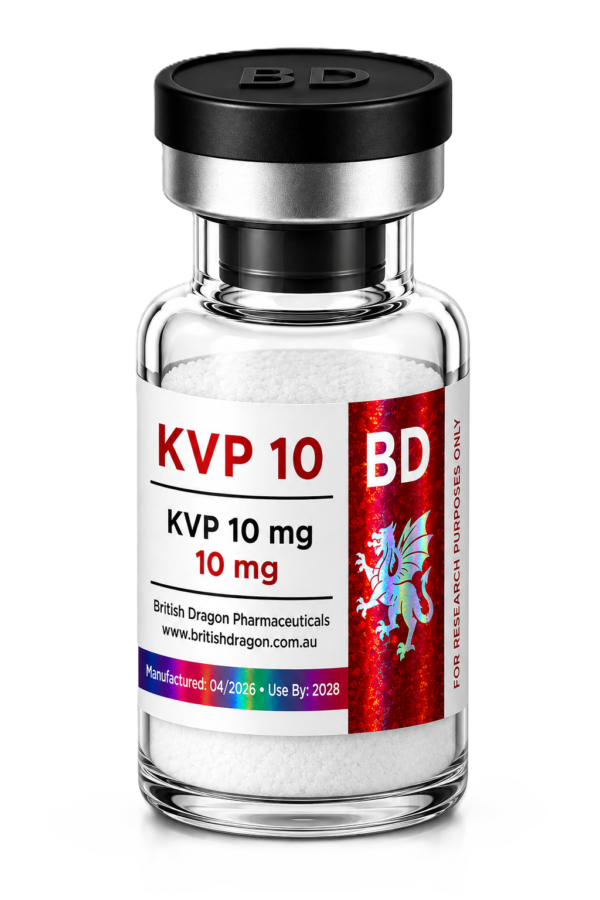
Component C — KPV (α-MSH 11–13)
Sequence Lys–Pro–Val
Molecular Formula C16H30N4O4
Molecular Weight ≈342.43 g/mol
CAS Number 67727-97-3
Component D — GHK-Cu (Copper-bound GHK)
Sequence Gly–His–Lys · Cu(II)
Molecular Formula C14H22CuN6O4
Molecular Weight ≈401.91 g/mol
CAS Number 89030-95-5
Formulation & Handling
Appearance White to off-white lyophilized powder
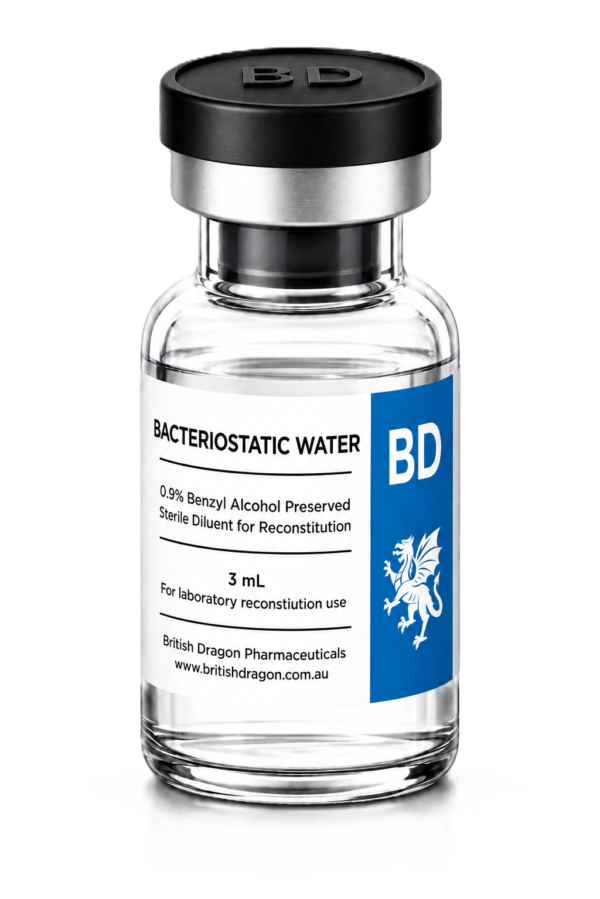
Solubility Soluble in sterile water or bacteriostatic water
Purity ≥99% per component (HPLC)
Storage Guidelines • Lyophilized: ≤0°F (–18°C), dry, protected from light
• Reconstituted: 36–46°F (2–8°C); avoid repeat freeze–thaw
• Long-term: Keep dry and frozen until use


Reviews

There are no reviews yet.

Be the first to review “Klow”

Your email address will not be published. Required fields are marked *

Knowledge Hub

Research & Education

Guides and reference material related to Klow.

  • Handling / Storage

    Peptide Reconstitution & Storage: Preserving Lyophilized Cake Stability

    Essential laboratory guidelines for reconstituting lyophilized peptides: selecting diluents, minimizing shear stress during fluid introduction, temperature cycling parameters, and optimal freeze-thaw mitigation.

    Last reviewed
    Revision
    2.0
    Read guide: Peptide Reconstitution & Storage: Preserving Lyophilized Cake Stability
  • Testing / COA Education

    Reading Lab Certificates of Analysis (COA): HPLC Traces & Mass Spectrometry

    A practical guide to interpreting analytical test reports: deciphering RP-HPLC chromatograms, understanding baseline integration, verifying electrospray ionization (ESI-MS) molecular mass, and evaluating third-party lab verification.

    Compound
    Retatrutide, mots-c
    Last reviewed
    Revision
    1.0
    Read guide: Reading Lab Certificates of Analysis (COA): HPLC Traces & Mass Spectrometry

Browse the Knowledge Hub

  • Testing / COA Education

    Reading Lab Certificates of Analysis (COA): HPLC Traces & Mass Spectrometry

    A practical guide to interpreting analytical test reports: deciphering RP-HPLC chromatograms, understanding baseline integration, verifying electrospray ionization (ESI-MS) molecular mass, and evaluating third-party lab verification.

    Compound
    Retatrutide, mots-c
    Last reviewed
    Revision
    1.0
    Read guide: Reading Lab Certificates of Analysis (COA): HPLC Traces & Mass Spectrometry
  • Handling / Storage

    Peptide Reconstitution & Storage: Preserving Lyophilized Cake Stability

    Essential laboratory guidelines for reconstituting lyophilized peptides: selecting diluents, minimizing shear stress during fluid introduction, temperature cycling parameters, and optimal freeze-thaw mitigation.

    Last reviewed
    Revision
    2.0
    Read guide: Peptide Reconstitution & Storage: Preserving Lyophilized Cake Stability
  • Comparison

    Wolverine 20: BPC-157 & TB-500 Synergistic Tissue Repair Pathways

    Examining the multi-modal angiogenic and cellular migration dynamics when pairing stable gastric pentadecapeptide BPC-157 with actin-sequestering peptide TB-500 in tissue culture and connective tissue assays.

    Compound
    bpc-157, tb-500
    Last reviewed
    Revision
    1.1
    Read guide: Wolverine 20: BPC-157 & TB-500 Synergistic Tissue Repair Pathways
  • Compound Guide

    Retatrutide (GLP-1 / GIP / Glucagon Tri-Agonist): Molecular Mechanisms & Preclinical Findings

    An in-depth biochemical review of Retatrutide (LY3437943), examining its multi-target agonist activity at GLP-1, GIP, and glucagon receptors, downstream cAMP accumulation, and energetic homeostasis in laboratory research models.

    Compound
    Retatrutide
    Last reviewed
    Revision
    1.2
    Read guide: Retatrutide (GLP-1 / GIP / Glucagon Tri-Agonist): Molecular Mechanisms & Preclinical Findings