
Peptide Reconstitution & Storage: Preserving Lyophilized Cake Stability
Essential laboratory guidelines for reconstituting lyophilized peptides: selecting diluents, minimizing shear stress during fluid introduction, temperature cycling parameters, and optimal freeze-thaw mitigation.
Fundamentals of Peptide Lyophilization
Synthetic research peptides are provided as lyophilized cakes, a state achieved through cryogenic sublimation that removes unbound solvent molecules while preserving tertiary structure. While dry lyophilized powder exhibits substantial stability at -20°C, improper reconstitution can instantaneously induce deamidation, oxidation, or irreversible intermolecular beta-sheet aggregation.
Diluent Selection & Chemistry
Choosing the correct solvent is critical to preserving compound bioactivity:
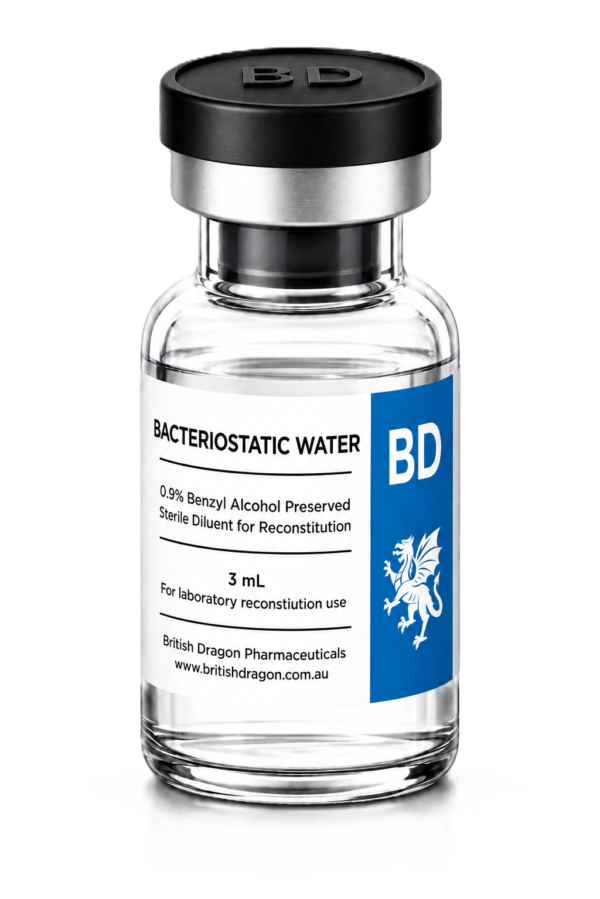
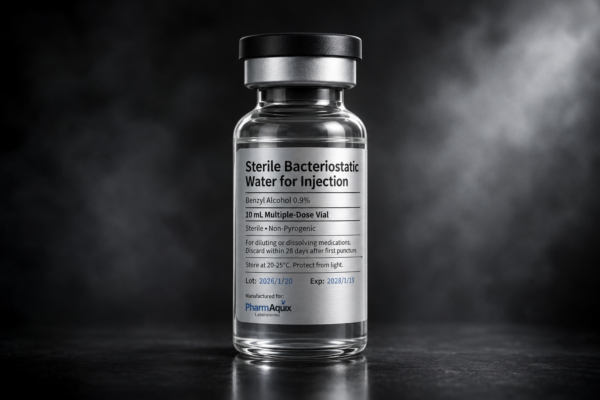
- Bacteriostatic Water (0.9% Benzyl Alcohol): The premier standard for multi-use research containers. The bacteriostatic agent suppresses microbial growth without destabilizing peptide bonds across pH 5.5 to 7.0.
- Sterile Water for Injection (USP): Recommended strictly for immediate, single-point analytical injections where benzyl alcohol might interfere with optical HPLC or spectroscopic readings.
- Acetic Acid (0.1% – 1.0%): Utilized as a preliminary solubilizing agent for hydrophobic or basic peptides that resist neutral dissolution.
Step-by-Step Reconstitution Protocol
- Thermal Equilibration: Allow the lyophilized vial to equilibrate to ambient room temperature (approx. 20 minutes) prior to uncapping. Opening a cold vial creates vacuum condensation that introduces destabilizing ambient moisture.
- Septum Sanitization: Swab the chlorobutyl stopper with an isopropyl alcohol (IPA) pad and allow complete air-drying.
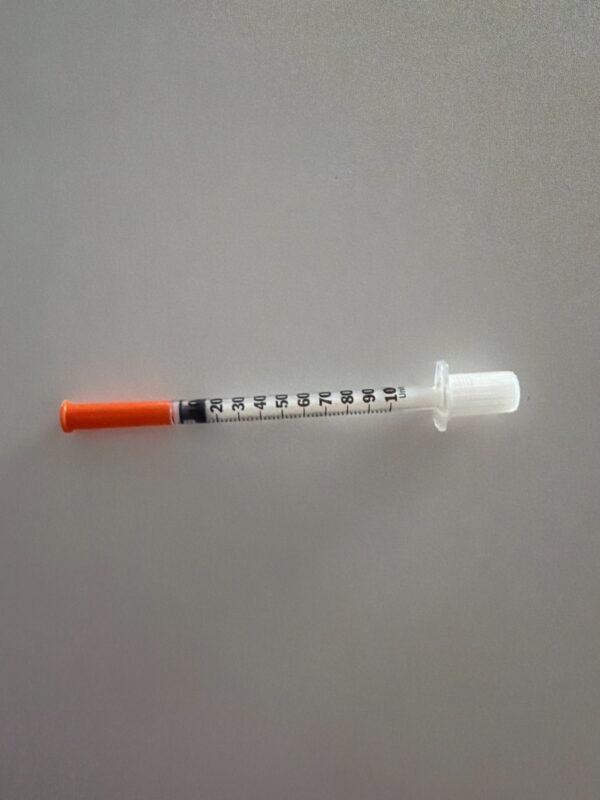
- Controlled Wall Stream: Draw the calculated diluent volume using a sterile research syringe. Angle the needle at approximately 45 degrees against the vial glass so the solvent trickles smoothly down the side wall without impinging directly upon the cake.
- Passive Dissolution: Let the vial rest undisturbed for 5 to 10 minutes. Swirl with gentle circular wrist motions if needed. Never shake or vortex peptide solutions.
Storage Stability Curve
Once reconstituted, peptide solutions must be stored at 2°C to 8°C in dedicated laboratory refrigerators. For experiments extending beyond 30 days, portioning into single-use polypropylene microtubes and storing at -80°C prevents cyclic freeze-thaw denaturation.
References
Peer-reviewed clinical & preclinical publications cited in this monograph.
-
1
Physical and Chemical Stability of Lyophilized Peptide Formulations Pharmaceutical Research Manning MC, Chou DK, Murphy BM, et al. Stability of protein pharmaceuticals: chemical and physical pathways of peptide degradation. Pharm Res. 2010;27(4):544-575.
-
2
Impact of Benzyl Alcohol Concentration on Synthetic Peptide Conformation Journal of Pharmaceutical Sciences Fransson J, Florin-Robertsson E. Reconstitution and preservation of biological peptides: analytical assessments. J Pharm Sci. 1996;85(3):239-245.
Related Compounds, Tiers & Certificates
Referenced Research Compounds
Verified pharmaceutical grade peptides available for analytical research.
-
-
-
- Sale

Associated Product Tiers
Explore the full category portfolio under these research tiers.