
MOTS-c: Mitochondrial Biology & Cellular Energy Regulation in Preclinical Models
A comprehensive analysis of the 16-amino-acid mitochondrial-derived peptide MOTS-c, detailing AMPK activation, nuclear translocation under metabolic stress, and mitochondrial-nuclear communication in cell culture.
Introduction to Mitochondrial-Derived Peptides (MDPs)
MOTS-c (Mitochondrial Open Reading Frame of the 12S rRNA-c) is a 16-amino-acid bioactive peptide encoded directly within the mitochondrial genome (mtDNA). Uncovered through transcriptomic sequencing of small open reading frames (sORFs), MOTS-c acts as an autonomous hormone-like factor facilitating bidirectional communication between the mitochondrion and the nuclear genome.
Cellular Target & Signaling Cascades
The primary mechanism of action for MOTS-c centers on the regulation of the folate-methionine metabolic cycle and purine biosynthesis:
- Inhibition of Folate Metabolism: MOTS-c targets the 10-formyl-tetrahydrofolate cycle, leading to the cellular accumulation of 5-aminoimidazole-4-carboxamide ribonucleotide (AICAR).
- Allosteric AMPK Activation: Elevated endogenous AICAR promotes the phosphorylation of AMP-activated protein kinase (AMPK) at Thr-172, switching cellular metabolism toward fatty acid oxidation and glucose uptake.
- Nuclear Translocation: Under conditions of glucose starvation or oxidative stress, MOTS-c rapidly migrates to the nucleus where it interacts with antioxidant response element (ARE) promoters via Nrf2.
Skeletal Muscle & Glucose Disposal in Research
In myotube cell cultures (C2C12) and rodent models of systemic insulin insensitivity, MOTS-c incubation restored GLUT4 transporter translocation to the plasma membrane independently of classic insulin receptor substrate (IRS-1) phosphorylation. Furthermore, muscle lipid accumulation (diacylglycerol and ceramide pools) was significantly mitigated.
Laboratory Preparation & Thermal Sensitivity
Because MOTS-c is a short peptide (MW 2174.5 Da) lacking extensive intra-chain disulfide crosslinking, it possesses high solubility in aqueous buffers. Reconstitution with bacteriostatic water at neutral pH (6.8 to 7.2) is recommended. Avoid repetitive freeze-thaw cycles; aliquots should be portioned upon initial dissolution and maintained at -20°C for prolonged analytical longevity.
References
Peer-reviewed clinical & preclinical publications cited in this monograph.
-
1
The Mitochondrial-Derived Peptide MOTS-c Promotes Metabolic Homeostasis Cell Metabolism Lee C, Zeng J, Drew BG, et al. The mitochondrial-derived peptide MOTS-c promotes metabolic homeostasis and prevents cellular insulin resistance. Cell Metab. 2015;21(3):443-454.
-
2
Nuclear Translocation of MOTS-c and Transcriptional Stress Response Cell Reports Kim KH, Son JM, Benayoun BA, et al. The mitochondrial-encoded peptide MOTS-c translocates to the nucleus to regulate metabolic stress response. Cell Rep. 2018;24(2):519-526.
Related Compounds, Tiers & Certificates
Referenced Research Compounds
Verified pharmaceutical grade peptides available for analytical research.
-
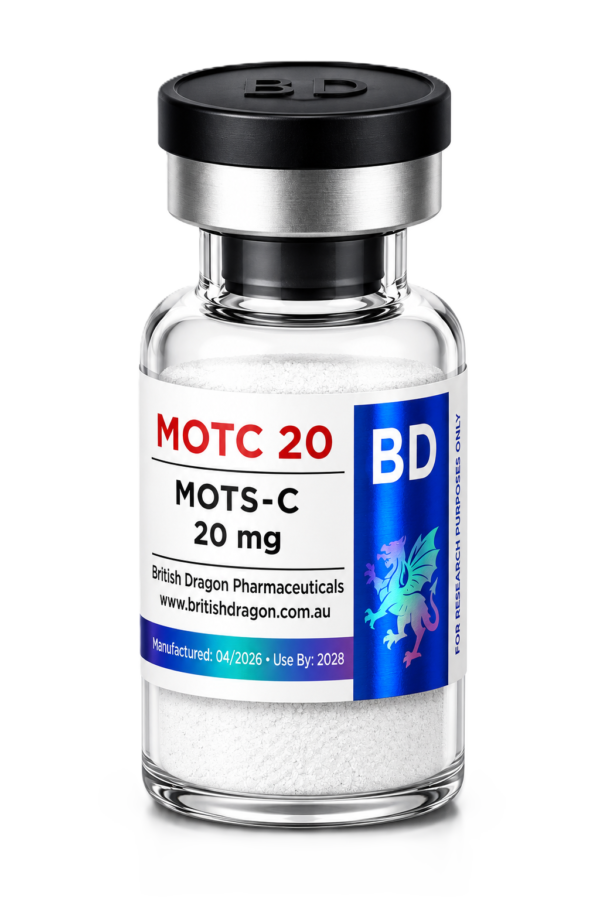
- Sale

Associated Product Tiers
Explore the full category portfolio under these research tiers.
Certificates of Analysis (COA)
Independent HPLC and mass spectrometry lab testing reports.